调解面对面
China's AI-powered 'flying lifebuoy' joins water rescue toolkit_我的网站

一 |

The "flying lifebuoy" debuts during a water rescue drill in Hangzhou, East China's Zhejiang Province. Photo: Official WeChat account of the Hangzhou governmentA "flying lifebuoy" recently made its debut during a water rescue drill organized by police in Hangzhou, East China's Zhejiang Province, as the city explores multiple high-tech solutions to improve emergency response in water accidents. The device received praise from a Chinese Foreign Ministry spokesperson.
According to a report posted on the official WeChat account of Hangzhou, an orange lifebuoy took off from the shore during the drill, flew toward a person who had fallen into the water, and landed on the water surface. Even when the person climbed onto it, the device remained stable and continued to float.
Minutes later, rescuers arrived and brought the person to safety. The lifebuoy then took off again and returned to its original location.
The device, officially called an AI intelligent flying rescue robot, is designed to provide rapid assistance in open waters where rescue boats may take time to arrive. Equipped with an autonomous navigation system, it can fly to people in distress, provide buoyancy support, and return automatically after completing its mission.
The drill featured multiple water rescue scenarios and tested several intelligent rescue technologies. Drones were used to drop inflatable lifebuoys above people in distress, which quickly inflate upon hitting the water to provide temporary buoyancy.
Another system combined an unmanned boat and drone for rescue operations in dangerous waters. The drone searches and locates people in need, while the boat navigates autonomously to assist the rescue. The drone can also provide lighting for nighttime searches, according to the report.
Chinese Foreign Ministry spokesperson Lin Jian highlighted in a social media post on August 14 that the AI-powered device is "technology that could help save lives."
Global Times
。

A local train driver receivs a notebook from his Chinese predecessor at the Adama station in Adama City, Ethiopia, Sept. 9, 2023. (Xinhua/Wang Guansen)The global perception landscape is changing. For decades, the United States occupied a dominant position in international public opinion. The latest Pew Research Center survey, however, points to a notable turning point: for the first time in more than two decades, China is viewed more favorably than the United States across a larger number of countries.
What explains China's growing appeal?
For many developing countries, China offers a practical development partnership centered on infrastructure, investment, industrialization, technology transfer and trade. Rather than prescribing a single pathway to modernization, it has generally emphasized allowing countries to pursue development in line with their national priorities.
One reason China's influence has grown is that its development model is highly visible. From Ethiopia's railways to Pakistan's power plants, Chinese-financed projects address everyday development challenges by improving transport, energy security and connectivity. Through the Belt and Road Initiative, China has mobilized nearly 1 trillion U.S. dollars in infrastructure investment, producing projects that citizens can see, use and associate with economic progress.
The distinction lies not only in the scale of investment but also in the evolving priorities of development cooperation. While many Western partners have increasingly emphasized economic security, strategic de-risking, private-sector mobilization and governance reform, China has combined large-scale investment in physical infrastructure with technology transfer, industrial cooperation and human capital development.
At the same time, China has actively promoted trade by expanding market access, including granting zero-tariff treatment to many least-developed countries, deepening currency-swap arrangements, and encouraging the use of local currencies in cross-border trade. Together, these measures seek to strengthen economic connectivity, reduce transaction costs and exchange-rate risks, and create new opportunities for developing countries to integrate into regional and global value chains.
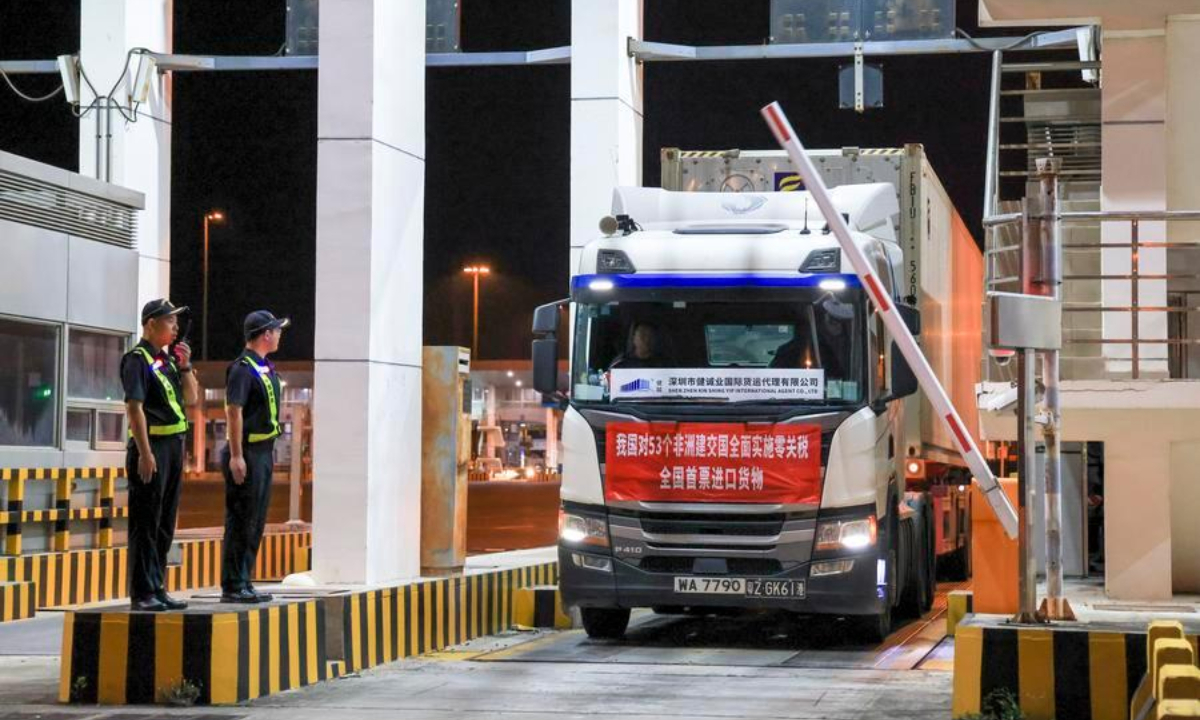
A container truck, transporting the first batch of imports under China's expanded zero-tariff treatment to 53 African nations, enters Shenzhenwan Port in Shenzhen, south China's Guangdong Province, May 1, 2026. (Xinhua/Mao Siqian)
This integrated approach has produced tangible improvements in productivity, connectivity and local capacity, reinforcing perceptions of China as a long-term development partner.
Equally important is the philosophy underpinning China's engagement. Beijing consistently emphasizes sovereignty, mutual respect and non-interference, maintaining that every country should determine its own political and development path. For many governments across the Global South, this approach is a partnership based on equality rather than political conditionality, allowing them greater policy space to pursue domestic development priorities.
Diplomatic style has also influenced perceptions. Through mechanisms such as the Forum on China-Africa Cooperation and regular engagement with Pacific Island countries, China has committed itself to equality and shared development. For many governments in the Global South, that sense of respect and recognition is not merely symbolic -- it contributes to long-term political trust.
Perhaps the most important nuance is this: the Global South is not becoming anti-American; it is becoming strategically pragmatic. Its foreign policy decisions are increasingly guided by national interests, economic opportunity, and development priorities rather than Cold War-style geopolitical alignment.
The Global South's primary ambition is neither ideological nor geopolitical -- it is developmental. Governments want to create jobs, eliminate poverty, modernize infrastructure, strengthen industrial capacity and improve the quality of life for their citizens. China's transformation over the past four decades, from lifting hundreds of millions of people out of poverty to becoming a global leader in infrastructure, manufacturing and technology, has demonstrated what sustained long-term planning can achieve. Consequently, many developing countries are looking to China not as a model to replicate wholesale, but as a development partner from which they can learn, cooperate and pursue shared prosperity while preserving their own policy autonomy.
This contrast is also reflected in broader policy priorities. At a time when many Western governments are increasingly emphasizing tariffs, export controls, technology restrictions, sanctions and economic security, China has continued to promote infrastructure investment, trade, industrial cooperation, technology partnerships, open-source AI initiatives and greater access to its domestic market. Whether one agrees with either approach or not, many developing countries evaluate partnerships primarily through the lens of economic development and tangible outcomes. That difference in emphasis is helping reshape global perceptions.
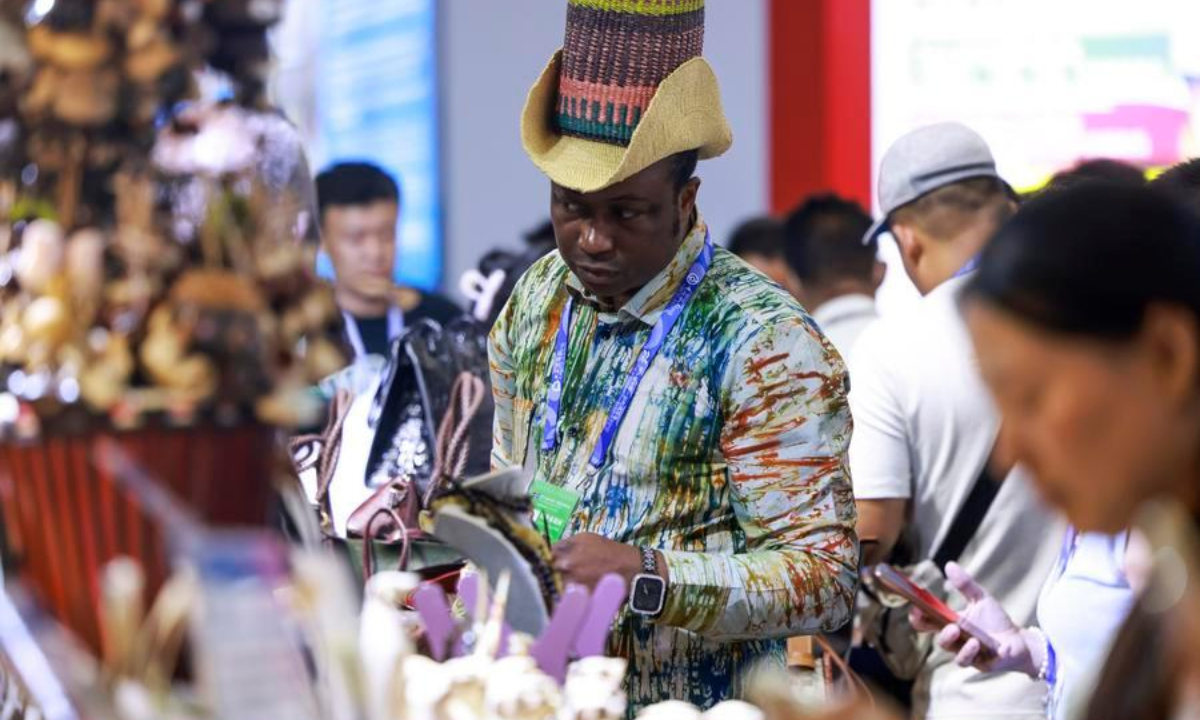
A staff member arranges exhibits at the booth of Nigeria during the 9th China-Eurasia Expo in Urumqi, capital of northwest China's Xinjiang Uygur Autonomous Region, June 25, 2026. (Xinhua/Wang Fei)
The world is changing, and the transition toward a more multipolar international order is becoming increasingly evident. The Global South is no longer a passive participant in world affairs. Its countries are exercising greater strategic autonomy, making decisions according to their own national interests, development priorities and the aspirations of their people. In China, developing countries have found a true friend and good partner.
Editor's note: Maya Majueran serves as the director of the Belt and Road Initiative Sri Lanka, an independent and pioneering organization with strong expertise in Belt and Road Initiative advice and support.
。
Current article:http://5yt515x.minpinpengcemiuanjiuxuan.pics/koutdf/20260826/9771605.html
Published on:02:53:59

 【持仓龙虎榜】摩根大通期货等多个头部机构集体减多低硫燃油
 Hong Kong hits record 36.9 degrees Celsius
 贝索斯1000亿美元的资产来自哪里?图的完全解
 生意社2026年8月18日PTA行情观点:上涨
 Adoor Gopalakrishnan Confirms New Film With Mammootty
 苏群:勇士这几年难有大作为 两年1.367亿续约库里一秒都不要犹豫
 IKBC E401机械键盘上架:87键樱桃轴,C型接口
 第18号台风“沙德尔”升级为超强台风级,19号台风“紫檀”、20号台风“简拉维”路径更新;中央气象台:广西、广东、浙江等地有大到暴雨


